Cathedral Notre
Cathedral Notre
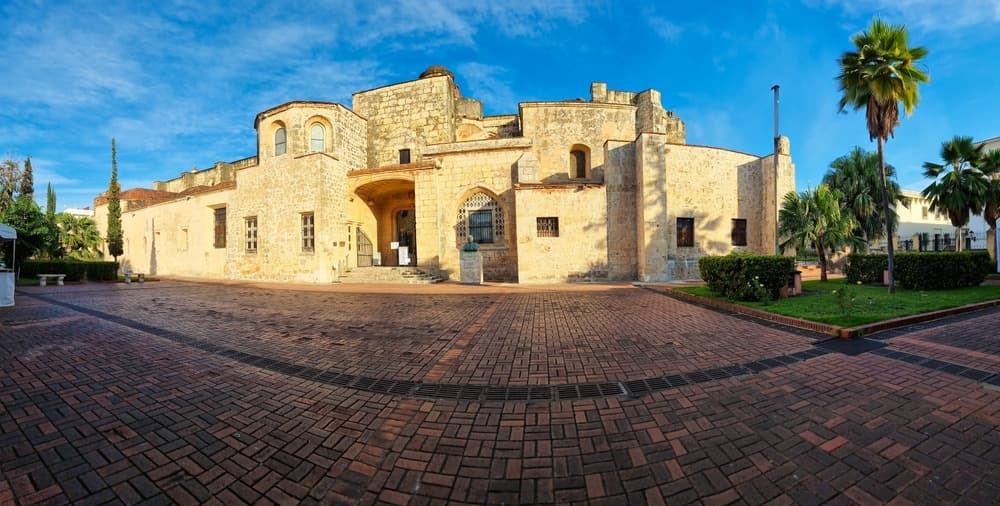
The first cathedral ever built in the Americas, the Catedral Primada de América displays its plateresque façade in the heart of the Colonial Zone of Santo Domingo.
The Cathedral of Our Lady of the Incarnation, also known as the Catedral Primada de América, holds a singular place in the history of the Americas: it is the first cathedral ever built on the continent. Located in the heart of the Colonial Zone of Santo Domingo, a UNESCO World Heritage Site, it marks the beginning of European religious architecture in the New World.
Why Visit the Catedral Primada de América
The building's appeal stems from both its antiquity and its architecture. Built in limestone at the beginning of the 16th century, it combines Spanish Renaissance, Late Gothic, and Moorish influences in the plateresque style characteristic of the era. Its austere façade, adorned with royal coats of arms and busts of the evangelists, contrasts with the richness of the interior: fourteen chapels with uniquely vaulted ceilings, a massive mahogany altarpiece, and a crypt housing several major figures from the colonial period.
The cathedral encompasses five centuries of Dominican history, from the founding of the colonial city through the raids of the privateer Francis Drake. It serves as a logical starting point for understanding the Colonial Zone and its iconic buildings.
History of the First Cathedral of the Americas
Before the current edifice, the first cathedral of Santo Domingo was merely a wooden structure, covered with palm fronds and with an earthen floor. Construction of the stone building began on March 26, 1514, under the impetus of Bishop Francisco García de Padilla. The plans were designed by Alonso Rodríguez, a Sevillian architect, and realized on-site by Luís de Moya.
Work continued until 1535. The originally planned bell tower was never built due to lack of funds—a particularity still visible today. The cathedral was consecrated in 1541, then became metropolitan in 1546 at the request of Charles V. Pope Paul III then elevated the diocese to the rank of archdiocese and granted its archbishop the title of "Primate of the Indies."
In 1586, the English privateer Francis Drake briefly seized the cathedral and established his camp there. According to tradition, he accidentally broke the nose of a statue while hanging his hammock in one of the chapels. In 1920, Pope Benedict XV granted it the title of minor basilica.
What to See Inside
Architecture and Dimensions
The building is wider than it is tall: 54 meters long, 23 meters wide, 16 meters under vault, with a total surface area exceeding 3,000 m². Three vaulted naves unfold without a transept, giving the space a rare horizontal reading for religious architecture of the period. The floor is paved with brick, and each of the fourteen lateral chapels features a different vault.
The Façade and Monumental Door
On the façade, note the royal coats of arms and busts of the evangelists. The main door, made of solid wood, weighs 2.5 tons. It dates from the construction period and was restored on the occasion of the 500th anniversary of the discovery of the Americas.
Remarkable Works and Chapels
- The massive mahogany altarpiece from the 17th century, one of the building's most precious elements
- A stained glass window depicting the baptism of Christ
- A wooden painting dated 1520, displayed in the Nuestra Señora de la Antigua chapel, showing King Ferdinand and Queen Isabella of Spain
The Crypt
The crypt houses several major figures from the colonial period: the conquistador Rodrigo de Bastidas, Mary of Toledo (considered the first vice-queen of the Indies), and Bishop Alessandro Geraldini. Until 1992, the cathedral also preserved the supposed remains of Christopher Columbus, since transferred to the Lighthouse of Columbus, east of the city.
Practical Information
- Location: Parque Colón, in the heart of the Colonial Zone of Santo Domingo
- Access: On foot from most points of interest in the historic center
- Hours: Open during the day Monday to Saturday, partial closure during Sunday religious services
- Admission: Modest entrance fee; audioguide often included or available for an additional charge
- Dress code: Shoulders and knees must be covered (active place of worship)
- Duration of visit: Allow 45 minutes to 1.5 hours depending on your interest in architecture and history
Nearby
The cathedral is part of a broader journey through the Colonial Zone: Parque Colón right in front, Calle Las Damas (the oldest paved street in the Americas), the Alcázar of Columbus and Museum of Royal Houses are all accessible on foot within minutes.
To extend your exploration of Dominican heritage, several sites complement a stop in Santo Domingo nicely: Altos de Chavón, a recreation of a 16th-century Mediterranean village, Cotubanamá National Park and its Taíno caves, or the Cave of Wonders with its pre-Columbian petroglyphs. On the nature side, the Damajagua Waterfalls and Cayo Arena offer a refreshing contrast to historical visits.
Frequently Asked Questions
Frequently asked questions
As in any active place of worship, attire covering the shoulders and knees is required. Avoid tank tops, short shorts, and beach wear. A light shawl is sufficient for visitors wearing sleeveless dresses.
Tourist access is suspended during religious services, particularly Sunday morning. It is advisable to plan your visit for a weekday or mid-afternoon to avoid celebrations.
No. The supposed remains of the navigator were preserved in the cathedral until 1992, then transferred to the Lighthouse of Columbus (Faro a Colón), built in the Santa Cruz neighborhood for the 500th anniversary of the discovery of the Americas.
The main entrance has a few steps but the interior, on a single level, remains generally accessible. The crypt, however, is not adapted for wheelchairs. It is best to inquire on-site the day of your visit.
Plan Your Trip
Santo Domingo and its Colonial Zone fit easily into an itinerary combining heritage, Caribbean beaches, and tropical nature. To build a custom itinerary incorporating the cathedral and the country's other major sites, consult our travel guide to the Dominican Republic.
Interested in this visit?
We can include it in your personalised itinerary.