Los Haitises National Park
Los Haitises National Park
Mangroves, caves adorned with Taino petroglyphs and karstic islets: Los Haitises National Park reveals another République Dominicaine—wild, serene, and intensely alive.
Far from the beachfront clichés of République Dominicaine, Los Haitises National Park transports you to an entirely different world: a labyrinth of verdant hills, dense mangroves, and caves etched with ancient petroglyphs. Here, you navigate by boat, gliding through mangrove passages, pausing at the entrance to a millennia-old grotto, then tilting your gaze skyward to follow a pelican's flight. Seeking a landscape that defies the ordinary? This park offers another way to discover the country—quieter, rawer, and intensely alive.
Let's explore this prehistoric and subtropical realm.
A Brief Geology of the Park
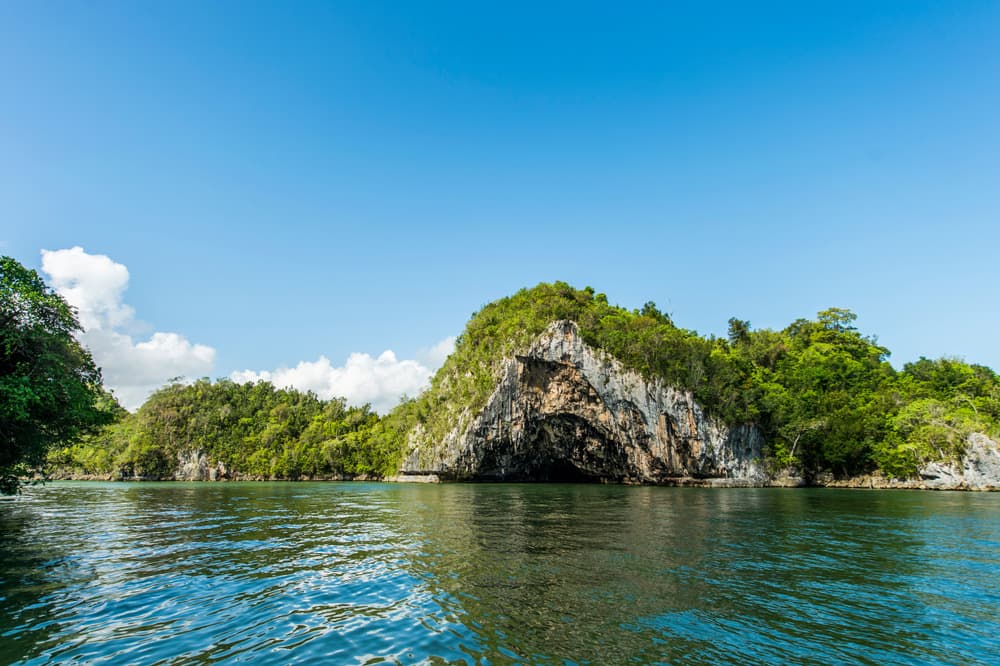
Discover Los Haitises National Park, and you'll encounter tranquility and untamed beauty. This natural reserve spans an impressive expanse—over 1,600 km²—showcasing an exceptional landscape shaped more than 50 million years ago. Within its boundaries lie karstic formations including sinkholes, rocky outcrops, cayes, and coral stone cliffs.
Tropical vegetation blankets the entire zone, encompassing both the peninsula and offshore islets. These latter formations resemble the famous mogotes of Ha Long Bay. The bay also cradles Bahia de San Lorenzo, with its fine sandy beach at Punta Arena. Multiple waterways—the Payabo and Los Cocos rivers among them—traverse this natural territory.
A Spectacle of Biodiversity
Vegetation within this sanctuary is remarkably rich. Coastal zones are dominated by mangroves. Various indigenous species—mahogany, calabash trees, orchids, and plants integral to traditional medicine—flourish harmoniously throughout. The site hosts over 700 plant species, many endemic to the region. Navigate the narrow passages edged with dense vegetation to witness this diversity firsthand.
Wildlife here is equally abundant. Along your journey, you may encounter pelicans, frigatebirds, hummingbirds, vultures, iguanas, and insects such as centipedes and local spider species. Marine fauna—including manatees, dolphins, and sea turtles—make their home here too. The reserve is a sanctuary for birds, with more than 100 species recorded. Cayo de los Pájaros, in particular, is renowned for hosting numerous frigatebirds, visible in flight or perched on branches.
What to See?
The Humid Tropical Forest of the Tainos
The humid tropical forest of the Tainos ranks among the park's essential destinations. This area stands out for its dense vegetation, naturally drawing visitors passionate about biodiversity.
San Gabriel Cave
San Gabriel Cave is the largest cavern available for exploration within this reserve. Crossing its thresholds, you'll discover multiple chambers whose walls are rich with archaeological remnants. This site attracts thousands of visitors each year, particularly those captivated by local heritage.
Cueva de Arena
Within Los Haitises National Park, Cueva de Arena is among the country's most ancient and celebrated caves. Access requires a boat journey. Inside, prehispanic paintings narrate a chapter of Dominican history.
Adjacent to the cave, a developed beach provides a pleasant setting to conclude your visit. English-speaking guides explain each painting before allowing you to immerse yourself in the natural surroundings.
The Cave of Time
Cueva del Tiempo is a modest grotto within Los Haitises National Park, yet it carries substantial history. You'll observe rupestral paintings left by the region's earliest inhabitants. Nearby, remnants from early 19th-century railroad development add further intrigue. Access requires a boat journey through multiple park sites.
When to Visit?
Between November and March, conditions align perfectly for visiting Los Haitises National Park. The climate is drier, temperatures pleasant, and opportunities to observe wildlife in its natural habitat significantly higher. This season is most highly recommended for planning an excursion.
Several routes lead to the park. From the Santa Bárbara de Samaná port, you can embark on a boat crossing lasting 30 to 45 minutes. Traveling from Santo Domingo, drive toward Sabana de la Mar—a journey of approximately three hours—before continuing your visit by boat from this access point.
Want to discover this destination?
Our local advisors design your tailor-made trip.