Southwest and Haitian Border
The country's driest and least visited region: cactus forest, crocodiles of Lake Enriquillo, the deserted beach of Bahía de las Águilas and the Haitian border.
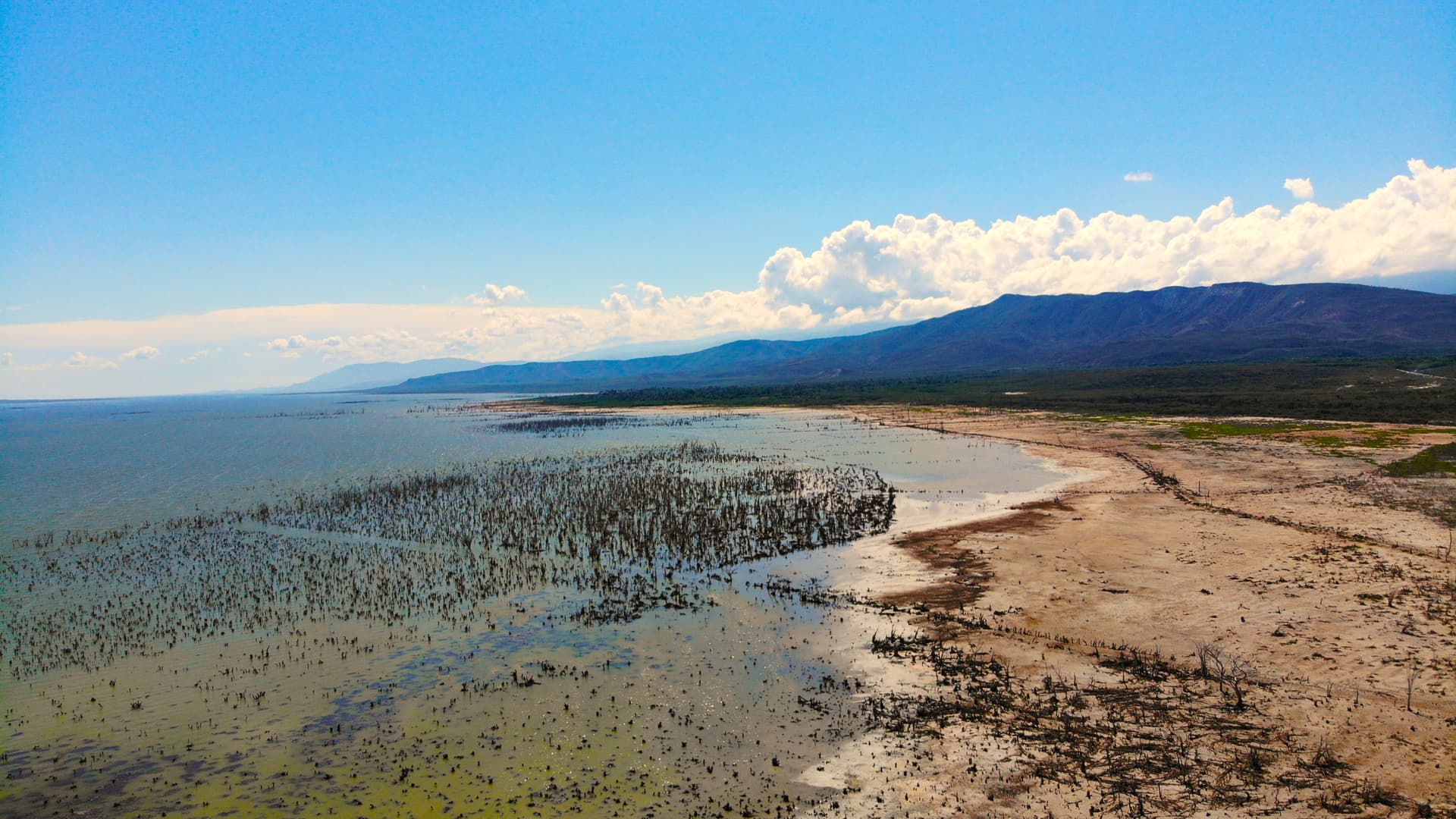
The Southwest is the part of the country we recommend to travelers who already know classic Caribbean destinations or who want to see a Dominican Republic very different from Punta Cana. Here, the climate shifts to semi-arid: less than 600 mm of rainfall per year on the Pedernales coast, landscapes of candelabra cacti, bayahondas (an endemic spiny acacia) and red earth. The massifs of the Sierra de Bahoruco and Sierra de Neiba frame a tectonic depression occupied by Lake Enriquillo, the largest lake in the Antilles and the lowest point in the insular Caribbean at 40 meters below sea level.
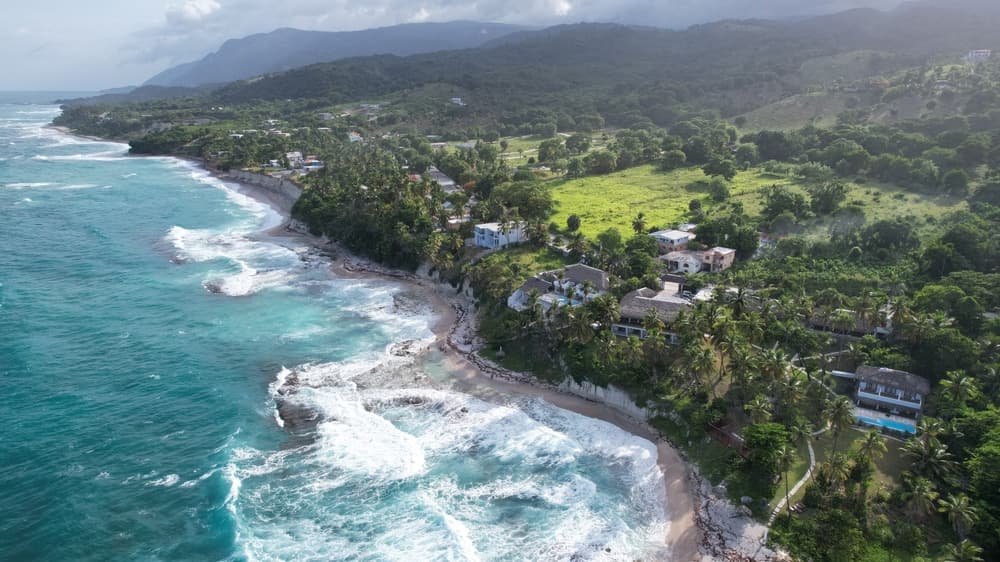
The region truly begins west of Barahona, a city of 80,000 inhabitants living off sugar, coffee and fishing. The coastal road descending toward Paraíso, San Rafael and Los Patos winds between cliffs and pebble beaches, with balnearios of fresh water where mountain rivers flow directly into the sea. Further south, Pedernales marks the end of Dominican territory: the border with Haiti runs through the middle of the town, and the binational market on Mondays and Fridays remains one of the region's most active economic gathering points.
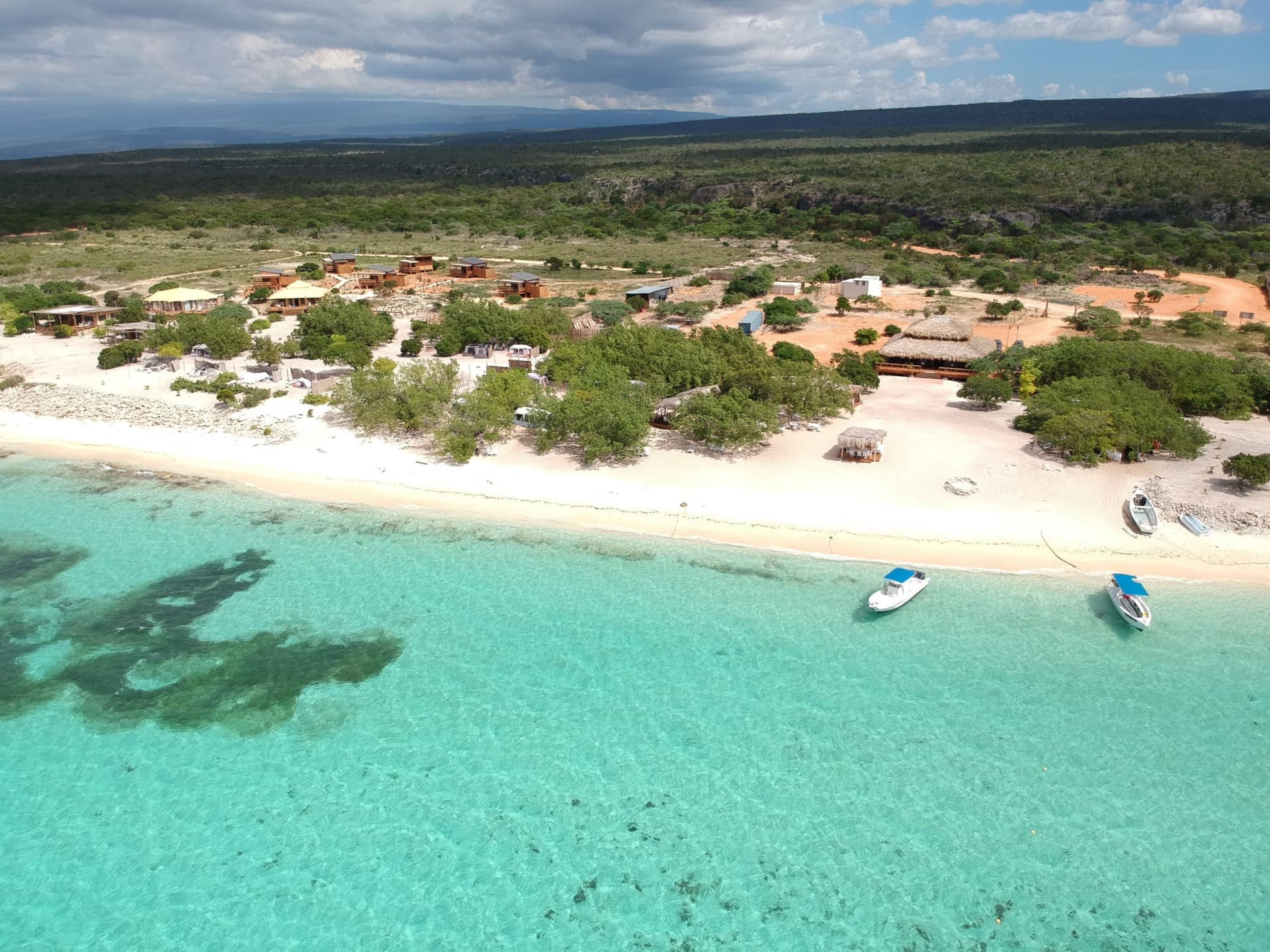
The natural heart of the Southwest is Jaragua National Park, 1,374 km² of dry forest, salt lagoons and unspoiled coastline. It's from the small port of Cabo Rojo that boats depart for Bahía de las Águilas, 8 km of white sand backed by limestone cliffs, with no construction whatsoever. The crossing takes 25 minutes and you must bring your own water, cooler and meal—there are no services of any kind on site. Just before Cabo Rojo, the Oviedo lagoon seasonally hosts several hundred pink flamingos; we organize rowboat outings here with community guides from Manuel Goya.
Lake Enriquillo itself is visited from La Descubierta or Postrer Río. You board to reach Isla Cabritos, a tongue of land home to one of the island's last wild populations of American crocodile, as well as two endemic iguana species (Cyclura cornuta and Cyclura ricordi). Nearby, Las Caritas, Taíno petroglyphs carved into the cliff face, recall that the region was densely populated before the Conquest. The lake level, highly saline, fluctuates dramatically: it doubled in surface area between 2003 and 2013 before receding, a phenomenon still poorly understood.
Culturally, the Southwest is marked by its proximity to Haiti and by a population of strong African descent, partly descended from sugar plantation workers. Gagá, music and ritual inherited from Haitian rara, is still practiced during Holy Week around Barahona and Neiba. On the table, you eat chivo (goat) in rum and oregano, abundantly raised in the Azua and Neiba areas, and coffee from the Sierra de Bahoruco, grown between 900 and 1,400 meters altitude, remains among the country's finest. The vineyards of Neiba produce local wine rare in the Caribbean, the fruit of a particular microclimate.
It's the least visited region of the country, even during high season (December–March). No all-inclusives, no large resort hotels, little signage. This requires a curious traveler, ready for long driving days and comfort in family lodges or small ecolodges, but it's also what makes it our favorite.
To Discover
Bahía de las Águilas by boat. 8 km of white sand within Jaragua Park, accessible only by a 25-minute boat ride from Cabo Rojo. No construction, no services, turquoise water and limestone cliffs as a backdrop.
Lake Enriquillo and Isla Cabritos. Salt lake 40 meters below sea level, navigation to an island sanctuary for American crocodiles and endemic iguanas. Nearby, the Taíno petroglyphs of Las Caritas carved into the cliff.
Pink flamingos of Oviedo lagoon. Rowboat excursion with community guides from Manuel Goya through a hypersaline lagoon where several hundred flamingos gather between November and April.
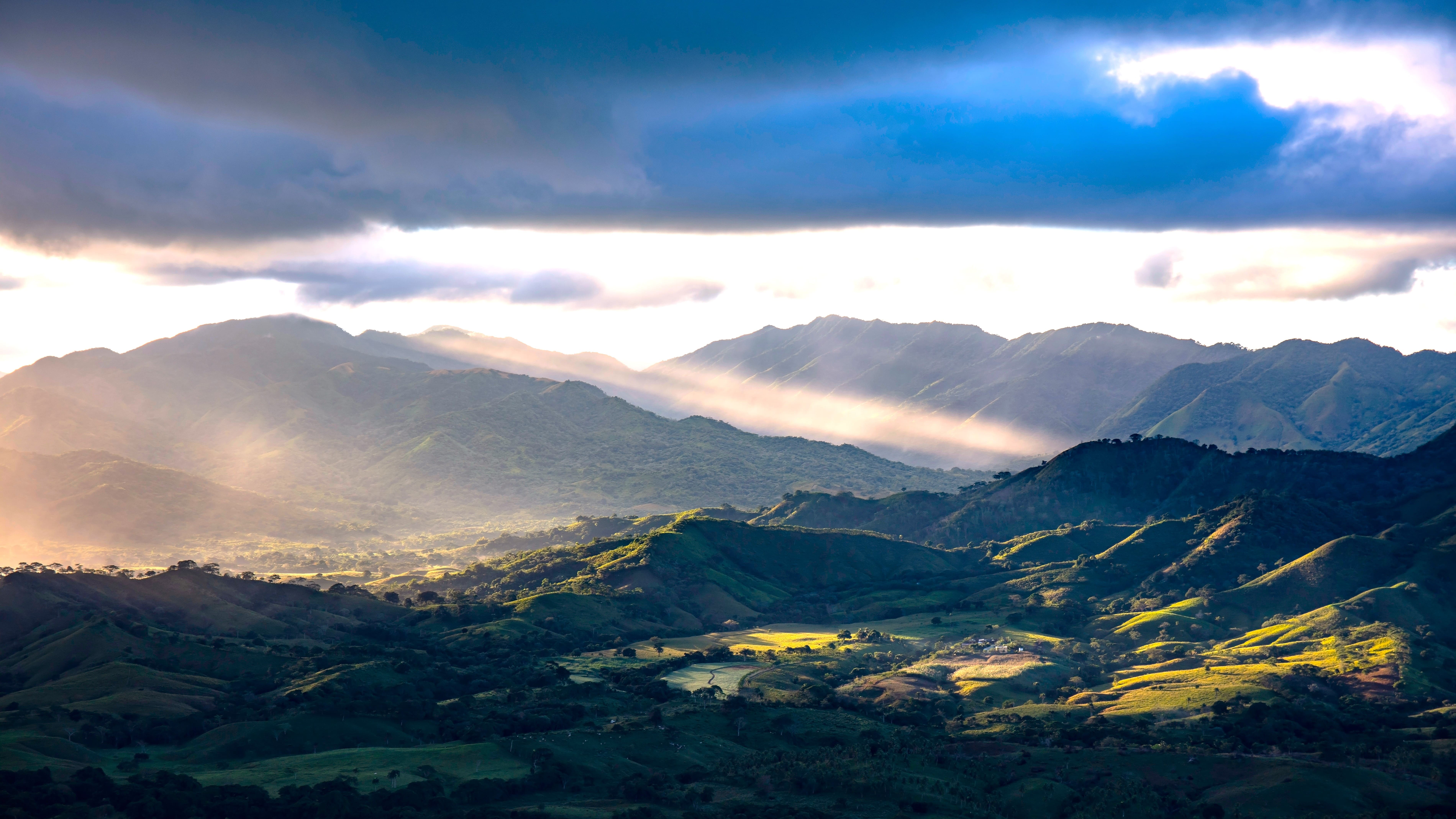
Coffee and villages of the Sierra de Bahoruco. Visit plantations between Polo and Cabral, at 1,000 meters altitude, with tastings at producers' farms. Cloud forest at elevation, a complete contrast with the dry coast.
Pedernales binational market. Every Monday and Friday, the border opens for a market between Dominican and Haitian traders. A concrete reading of transborder economic exchanges, off the tourist circuit.
When to Go
The best period for the Southwest extends from December to April: dry days, coastal temperatures of 26 to 30 °C, clear skies for boat trips to Bahía de las Águilas, and maximum flamingo presence at Oviedo lagoon. It's also when the sea is calmest, essential for the crossing to the bay and for snorkeling at Bahoruco. At altitude, in the Sierra de Bahoruco, expect 15 to 20 °C at night in January; bring a fleece.
From May to October, rainfall remains moderate on the coast (the Southwest is significantly drier than the rest of the country), but temperatures climb to 33–35 °C and humidity becomes heavy. September and October are best avoided for two reasons: peak hurricane season and swell that can prevent trips to Bahía de las Águilas for several days in a row. November is a good shoulder season, little rain, few crowds, temperatures already back down.
Practical Tips
We recommend a minimum of 4 days for the Southwest, ideally 5 to 6. From Santo Domingo, allow 3 hours 30 minutes of driving to Barahona and 5 hours to Pedernales, via the 6 de Noviembre highway then the coast road. María Montez Airport in Barahona has virtually no commercial flights anymore, so entry is by road from the capital. A private vehicle with driver is the simplest solution; distances are long and signage is unpredictable. The region logically combines with Santo Domingo and the Southeast at the start or end of your trip, or with the Central Cordillera (Constanza, Jarabacoa) via Azua, in 4 hours of driving.
Comfort remains modest: small family hotels in Barahona and Paraíso, ecolodges at Cabo Rojo and in the Sierra de Bahoruco, a few community lodgings. No large pools, no spas. This is a destination for nature lovers, contemplative travelers, photographers, or couples who've already traveled the Caribbean and are seeking something different. For families with young children, long drives and lack of entertainment can be challenging; we adapt the program accordingly with more time at the fresh-water balnearios along the coast.