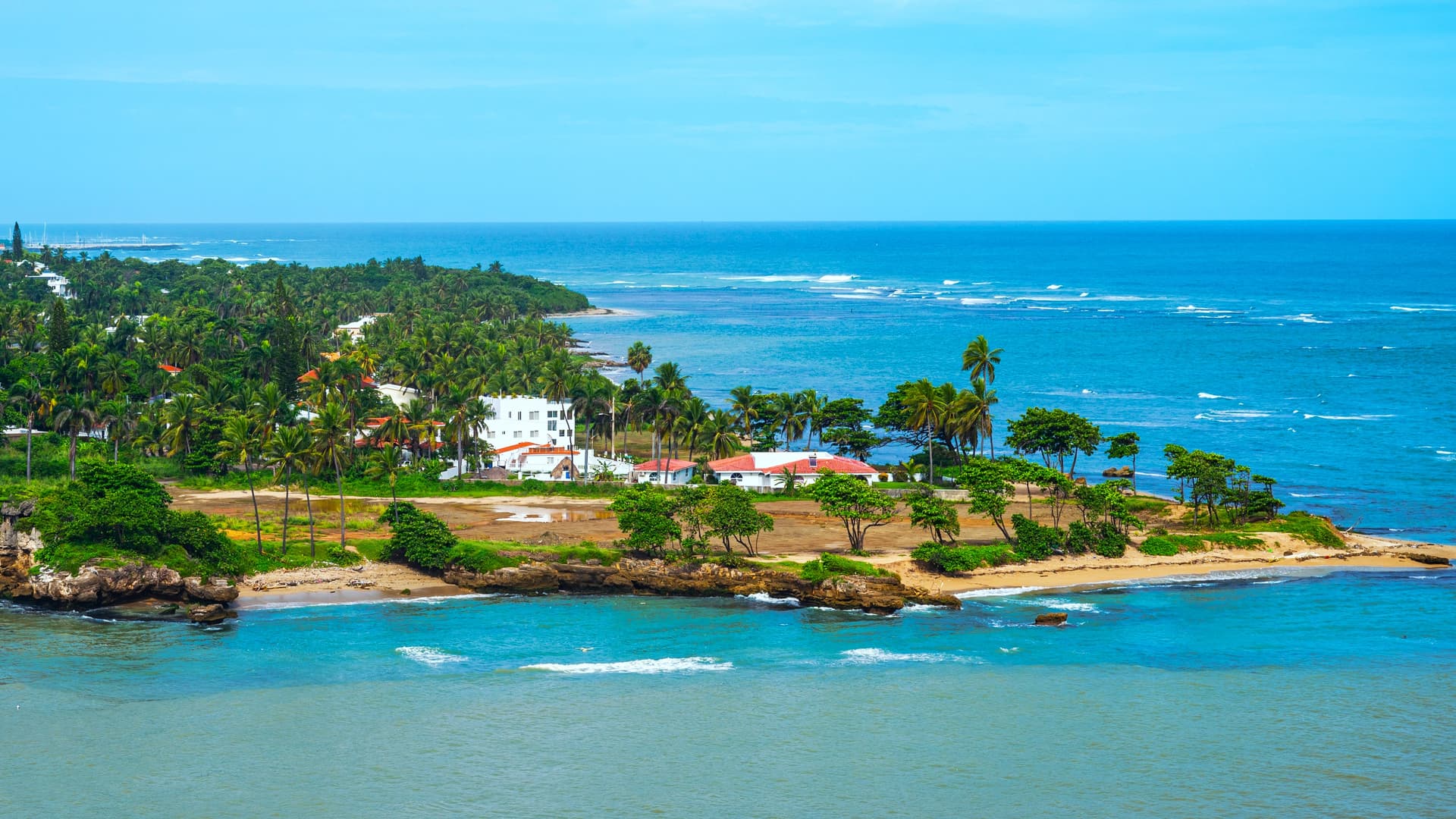
North Coast and Puerto Plata
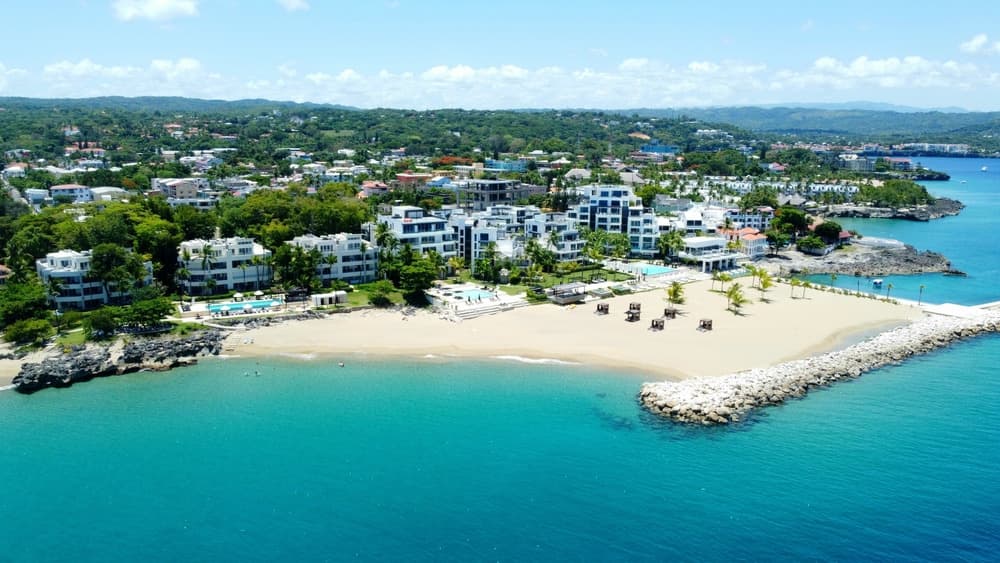
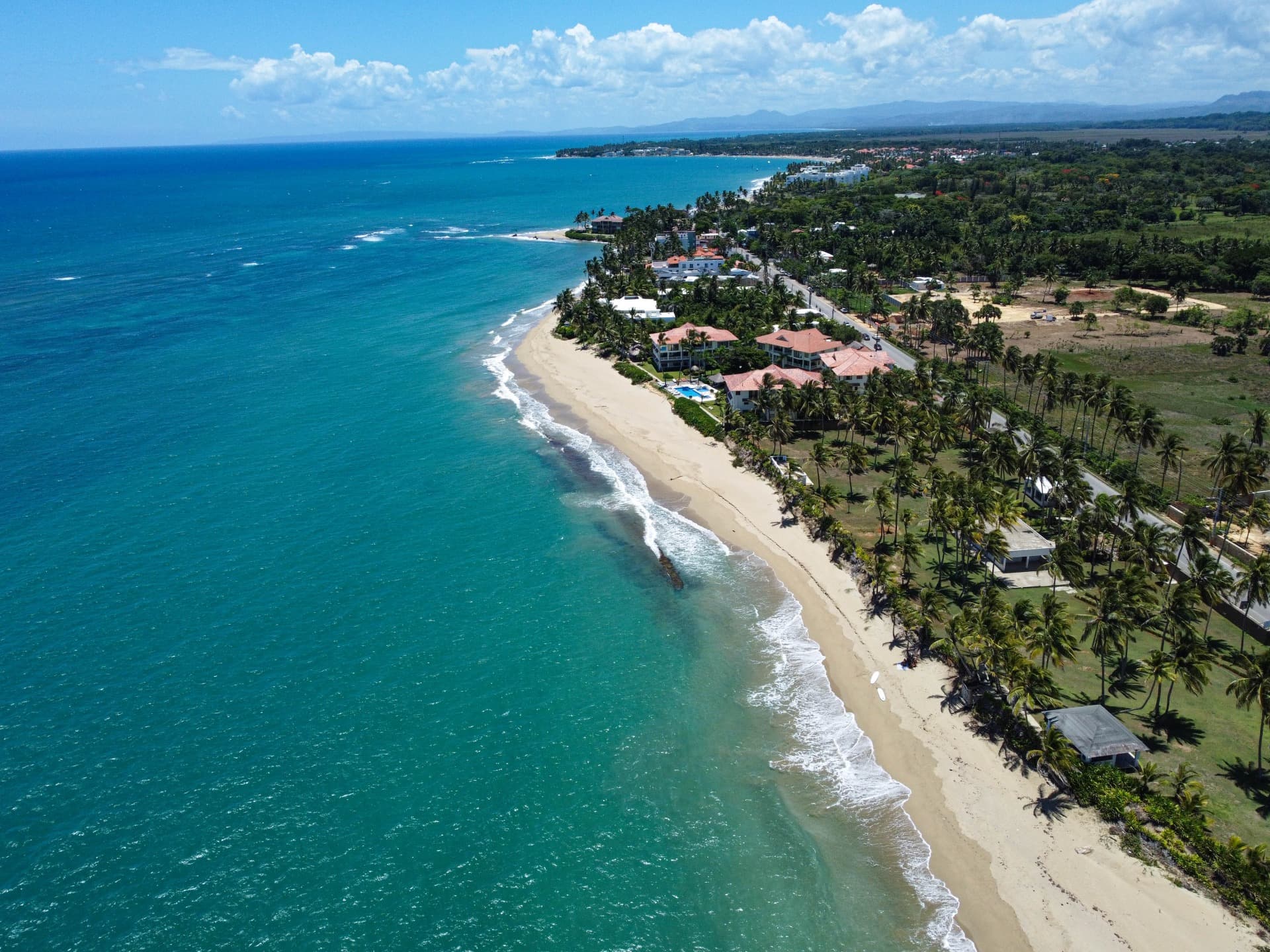
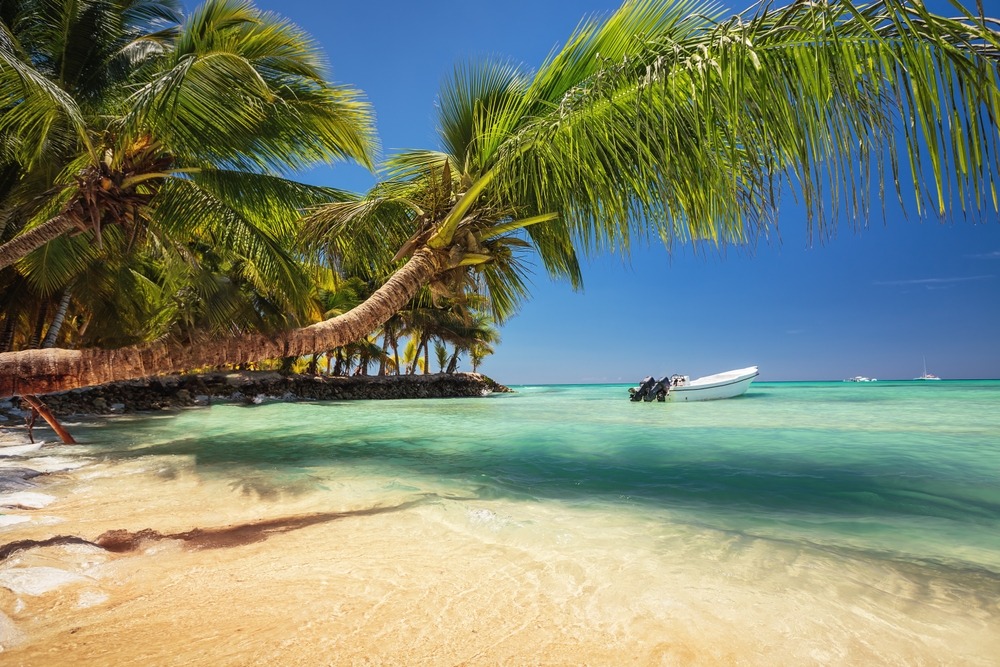
The Dominican north coast stretches 250 km between the Atlantic and the Northern Range, where colonial Puerto Plata, kitesurfing in Cabarete and the Damajagua waterfalls coexist.
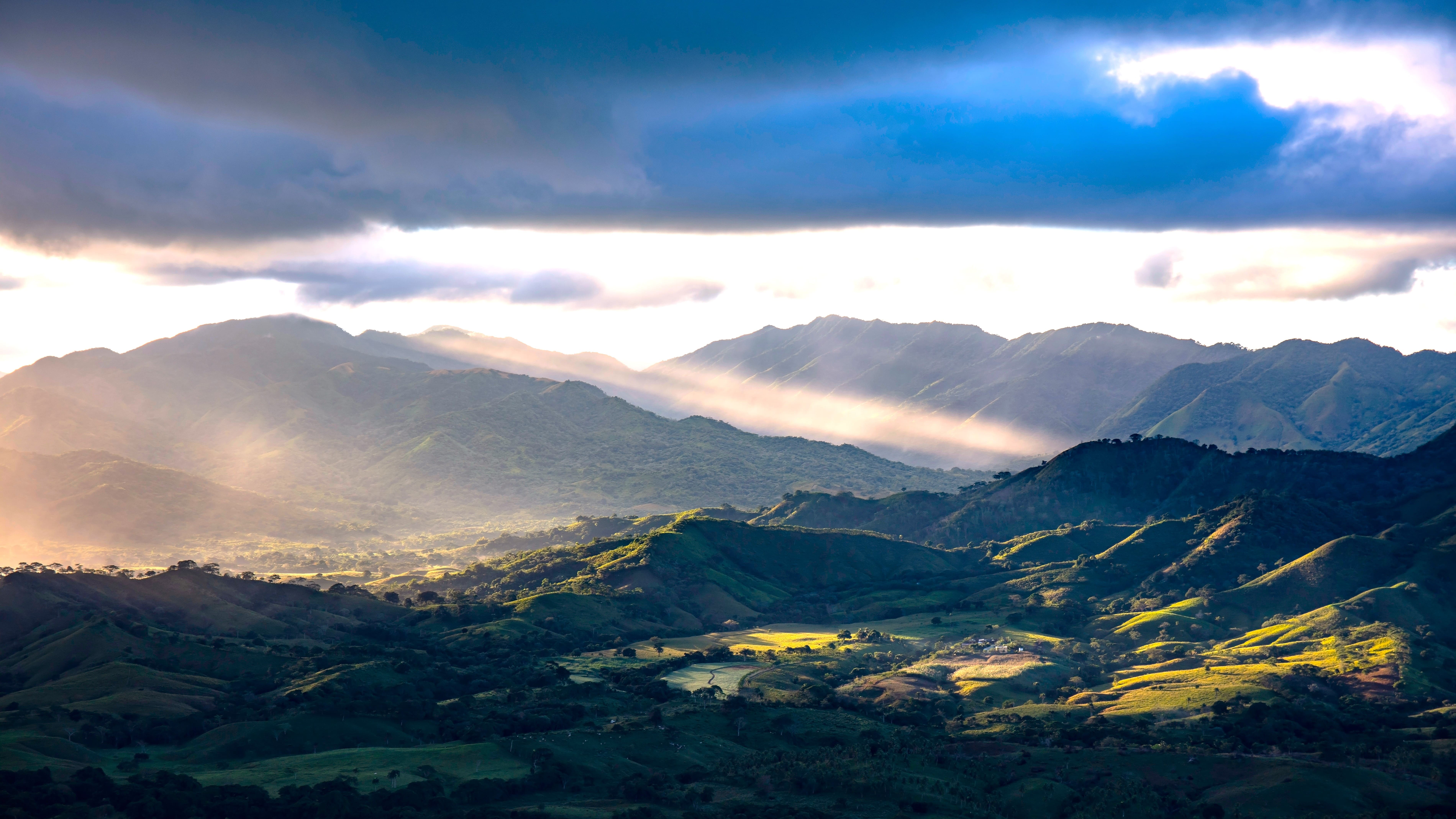
The Dominican north coast extends nearly 250 kilometers between Monte Cristi to the west and Cabrera to the east, along the Atlantic. We call it the Costa del Ámbar, named after the fossil resin extracted from the mines of La Cumbre, in the foothills of the Northern Range. This mountain chain, which peaks at 1,249 meters at Diego de Ocampo, blocks the trade winds and explains the dense, almost tropical humid vegetation that descends to the beaches.
Puerto Plata, founded in 1502, remains our gateway. The San Felipe fortress, completed in 1577 to repel pirates, still guards the harbor entrance. The cable car, the only one in the Caribbean, takes eight minutes to reach the summit of Isabel de Torres at 793 meters, where a statue of Christ the Redeemer overlooks the bay. The historic center boasts nearly 400 Victorian wooden houses painted in bright colors, a legacy of the German and Cuban families who settled there in the 19th century for the tobacco and sugar trade.
Further east, Sosúa holds the memory of a rare episode: in 1940, dictator Trujillo welcomed approximately 700 European Jews fleeing Nazism. The small synagogue and community museum still bear witness to this history. Fifteen minutes' drive away, Cabarete has established itself since the 1980s as one of the world's leading centers for kitesurfing and windsurfing, thanks to the trade winds that blow at 18 to 25 knots from December to August, with calm morning seas and wind picking up in the early afternoon.
Beyond Cabarete, Highway 5 crosses Río San Juan and its Gri-Gri lagoon, where we board motorboats among the red mangroves to reach the Cueva de las Golondrinas and Playa Caletón. Cabrera marks the eastern limit, with its limestone cliffs already announcing the Samaná peninsula. To the west, the road to Luperón and La Isabela leads to the site of the first permanent European colony in the Americas, founded by Christopher Columbus in 1493.
The region thrives on tourism, but also agriculture: organic cacao around Altamira, high-altitude coffee on the slopes of the mountain range, sugarcane in the Montellano plain. Brugal rum, distilled in Puerto Plata since 1888, remains the historic employer. At the table, we love serving pescado con coco, fish simmered in coconut milk found especially on the coast around Río San Juan, and chicharrón de pollo served with tostones at neighborhood comedores.
The 27 waterfalls at Damajagua, in the national park of the same name, form a succession of pools and cascades carved into the limestone of the Northern Range. Depending on water levels and physical fitness, we offer the descent of 7, 12 or 27 waterfalls, with jumps of 1 to 8 meters and natural water slides, helmets and life vests provided by local community guides.
What to discover
Isabel de Torres cable car. Cabin ride up to 793 meters, clear views over Puerto Plata bay and botanical garden at the summit, best visited before noon to avoid afternoon cloud cover.
Descent of the 27 Damajagua waterfalls. Half-day adventure in wetsuit and helmet through a succession of limestone cascades, with jumps into turquoise pools and natural water slides. Suitable for children from age eight on the shorter version.
Kitesurfing in Cabarete and Playa Encuentro. Kite Beach and Bozo Beach spots for regular afternoon trade winds, and Playa Encuentro six kilometers away for sunrise surfing, most consistent waves from November to March.
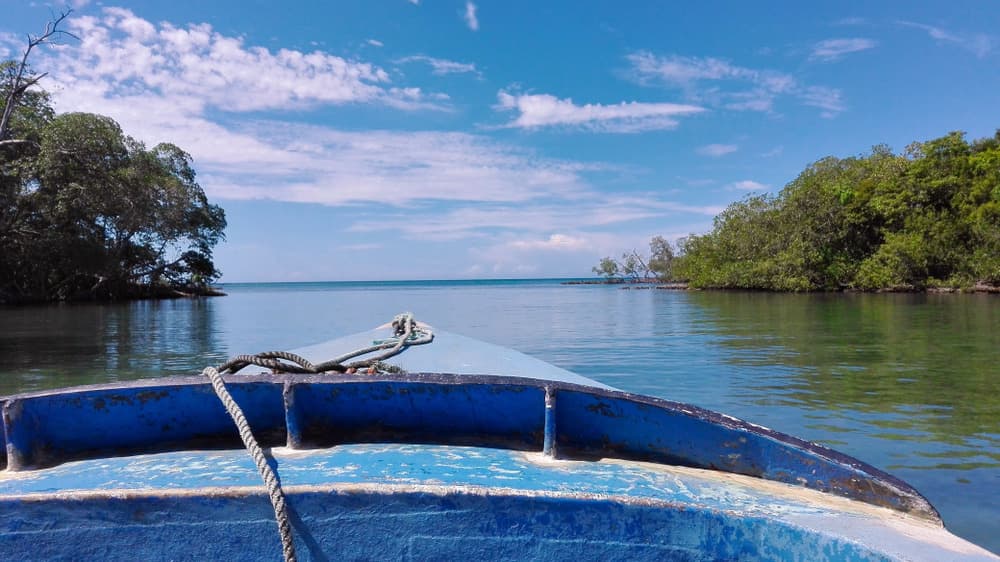
Gri-Gri lagoon at Río San Juan. One-and-a-half-hour boat excursion among the red mangroves, passage through the swallows' cave and swimming stop at sheltered Playa Caletón.
Jewish heritage of Sosúa and La Isabela site. Two rarely combined historical stops: the museum of the Jewish community established in 1940, and the remains of the colony founded by Columbus in 1493, 50 kilometers west of Puerto Plata.
When to visit
The north coast receives more rain than the country's south, approximately 1,600 mm per year versus 1,400 mm in Santo Domingo, due to trade winds meeting the Northern Range. The driest months extend from February to April, with temperatures of 24 to 29°C and sea at 26°C. From December to March, the climate is pleasant but brief late-day showers remain possible. May and especially November see the heaviest rainfall, sometimes 200 mm over the month, which makes inland tracks difficult.
The hurricane season runs from June to November, with a statistical peak in September. We advise against this period for a trip focused solely on the north coast. Conversely, July and August remain feasible: temperatures of 28 to 32°C, steady wind ideal for kitesurfing in Cabarete, and generally short showers. For the Damajagua waterfalls descent, the 27-waterfall version is open from May to November when water flow permits; in dry season, only the first 12 are accessible.
Practical advice
We recommend a minimum of 4 days on the north coast, 6 to 7 if you want to combine Puerto Plata, Cabarete, the Damajagua waterfalls and Gri-Gri lagoon without driving every day. The international Gregorio Luperón airport (POP), 18 kilometers east of Puerto Plata, serves several European and North American cities directly, avoiding the transfer from Santo Domingo (4.5 hours by road). From Santiago (STI), allow 1 hour 15 minutes via the Duarte highway.
The most natural combination is with the Samaná peninsula, 2.5 hours from Cabarete along the coastal road, ideal for extending to Las Terrenas or watching humpback whales from mid-January to mid-March. To the south, the Central Range and Jarabacoa are 2 hours from Puerto Plata, opening a beach-and-mountain contrast on a single circuit. The north coast suits families wanting to blend beach, river and culture, active travelers (kitesurfing, surfing, canyoning) and those seeking a less resort-oriented pace than Punta Cana. Accommodation ranges from ecolodges in Río San Juan to resorts in Playa Dorada; we favor charming hotels in Cabarete and guesthouses in Puerto Plata's historic center.