Cave of Wonders
Cave of Wonders
Underground archaeological site between San Pedro de Macorís and La Romana: 500 Taíno petroglyphs, limestone formations and a 45-minute trail.
The Cave of Wonders (Cueva de las Maravillas) is an underground archaeological site located between San Pedro de Macorís and La Romana, on the southeast coast of the Dominican Republic. Developed for visitors, it preserves approximately 500 petroglyphs and rock paintings left by the Taíno, the island's first inhabitants.
Why visit the Cave of Wonders
Cueva de las Maravillas combines archaeological and geological interest in an accessible format: 45 minutes of guided exploration, a well-maintained trail with ramps and an elevator, and a rare concentration of pre-Columbian rock art still in situ. It is one of the few caves in the region where you can observe both authentic Taíno artwork, human remains thousands of years old, and geological formations inherited from ancient coral reefs.
The site welcomes a diverse audience, including visitors with mobility challenges and families with children, making it an easy cultural stop to fit into a itinerary between Santo Domingo, La Romana, and Bayahibe.
History and rediscovery
In 1926, a group of explorers from San Pedro de Macorís unearthed this ancient cave, whose walls preserved hundreds of engravings and paintings intact. The petroglyphs attributed to the Taíno are estimated to be approximately 800 years old, a period consistent with the presence of this culture in the Greater Antilles before European arrival.
Excavations at the site also revealed considerably older human remains, dated between 4,000 and 5,000 years ago, evidence of human occupation long before the Taíno.
What to see inside
Access begins 25 meters underground. The cave extends nearly 800 meters in total, with 240 meters open to the public. The trail is clearly marked and equipped with ramps and an elevator to reach the underground level.
Taíno rock art
Approximately 500 petroglyphs and paintings line the circuit. The Grand Panel brings together human silhouettes, iguanas, owls and serpents, motifs often associated with funeral rituals. Subtle lighting has been designed to reveal the artworks without altering them.
Geological formations
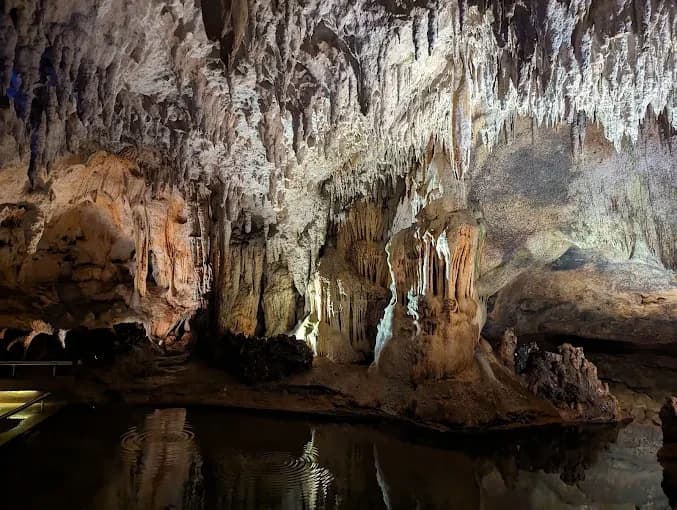
The trail showcases stalactites, stalagmites, limestone columns, ancient coral reefs embedded in the rock, and animal impressions dating from the late Pleistocene. The Water Mirror, an artificial basin installed to create perfect reflections on the walls, is one of the trail's striking photographic points—though photography remains prohibited on site.
Underground fauna
The cave still hosts active wildlife: predominantly bats, but also snakes, toads, centipedes, amphisbaenians and spiders. None of these species pose any risk during a guided visit.
Practical information
The guided tour lasts approximately 45 minutes. Guides are available in Spanish, English, and French. Opening hours generally run from morning to late afternoon (confirm locally before visiting).
A few guidelines to follow for site preservation:
- Photography, video and audio recording are prohibited
- Do not touch the walls or artworks
- Speak quietly throughout the trail
- Wear light clothing and comfortable walking shoes
- Leave nothing behind
How to get there
The cave is located approximately 70 kilometers east of Santo Domingo, on the road connecting San Pedro de Macorís to La Romana. From either of these two cities, a taxi ride is short and moderately priced; expect just a few dozen minutes depending on your starting point.
Access landmark: after crossing the Soco River bridge, the site entrance is marked on the left by a large fence, approximately three minutes further on. The ticket office is located roadside, allowing you to purchase tickets directly from your vehicle.
The parking lot accommodates up to 50 cars and 18 buses. The site also has a helipad and a small airstrip.
What to see nearby
Cueva de las Maravillas pairs well with other stops along the southeast and eastern coast of the Dominican Republic. About thirty minutes away, the artistic village of Altos de Chavón overlooks the Chavón River. Further east, Cotubanamá National Park protects another network of Taíno caves and a pristine coastline. To extend your nature-focused exploration, Gri Gri Lagoon and Dudù Lagoon offer two distinct mangrove and cenote experiences.
Frequently asked questions
Frequently asked questions
Yes. The site is equipped with ramps, marked trails and an elevator allowing descent of the 25 meters to the main gallery. The route is suitable for seniors and visitors with mobility restrictions, within the 240 meters open to the public.
The guided tour lasts approximately 45 minutes. With check-in, possible group wait times and ticket purchase, allow approximately 1 to 1.5 hours on site.
No. Photography, video and audio recording are prohibited to protect the petroglyphs and cave fauna, particularly bats sensitive to flashes and noise.
Site guides offer tours in Spanish, English, and French.
Incorporating the Cave of Wonders into your trip
Cueva de las Maravillas fits naturally into an itinerary between Santo Domingo, La Romana and Bayahibe. To build a coherent stay centered on Taíno archaeology, east coast beaches and natural parks, explore our Dominican Republic journeys.
Interested in this visit?
We can include it in your personalised itinerary.