Damajagua Waterfalls
Damajagua Waterfalls
Near Puerto Plata, the 27 Charcos of Damajagua offer a unique water course through waterfalls and pools, guided by a local guide association.
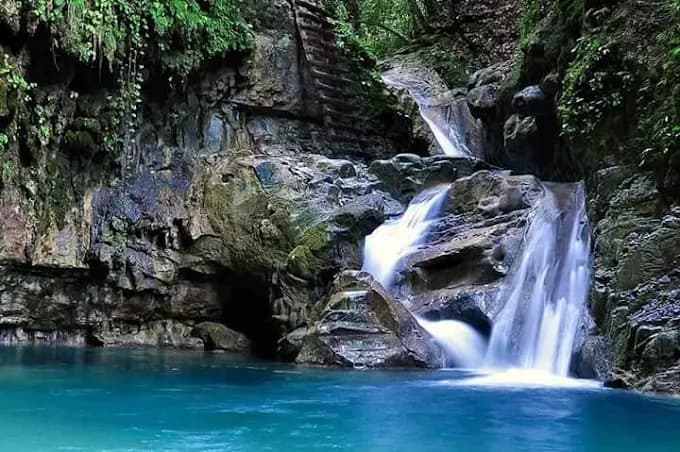
The Damajagua waterfalls, known as 27 Charcos by locals, form one of the most renowned natural sites in northern Dominican Republic. Less than an hour from Puerto Plata, they offer a unique water course: a succession of cascades, crystal-clear pools and natural slides carved into limestone rock, explored under the mandatory guidance of a local guide.
Why visit Damajagua Waterfalls
The site combines three rare assets on a single route: a protected forest setting, a playful water activity suited to different fitness levels, and a recognized community management model. Water flows continuously through narrow gorges, forming translucent pools where you can swim, jump or glide over polished rock. Access is regulated to limit visitor numbers, which preserves both the environment and the quality of your experience.
Unlike many natural sites operated by outside companies, Damajagua remains managed by residents of neighboring villages, which is evident in the quality of guidance and deep knowledge of the terrain.
History: a model of community ecotourism
The site's recent history is inseparable from the Damajagua Guides Association, whose sign marks the park entrance. Created by residents of surrounding rural communities, this association has structured visitor reception around a cooperative model: guides come from neighboring villages, trained in water safety, and site revenues directly fund the communities and protection of the area.
This approach, often cited as an example throughout Latin America, has transformed a site once threatened by logging into a protected natural area. The visit is based on a simple principle: no access is possible without an official guide, and each entry contributes to preserving the site.
The three possible routes
The site offers three itineraries, chosen upon arrival based on your fitness level and available time. All begin with a walk through the forest (approximately 45 minutes) before reaching the first waterfall, then continue by ascending the river course.
- 7 waterfalls (1 to 2 hours): the most accessible route, suited to families and those wishing to discover the site without significant physical commitment. It already provides a good overview of the pools and jumps.
- 12 waterfalls (approximately 3 hours): an intermediate option that adds more technical passages and some higher jumps.
- 27 waterfalls (approximately 4 hours): the complete route, reserved for those in good physical condition. It covers all obstacles up to the canyon summit.
At each waterfall, the guide offers two options: jump into the pool or descend via a bypass route. No jump is mandatory.
Practical information
Access to the site is only with a local guide; helmet and life jacket are provided on-site. Plan a full half-day to enjoy the route without rushing.
What to bring:
- Closed-toe non-slip shoes or water shoes (flip-flops are not recommended on wet rock)
- Swimsuit worn under light quick-drying clothes
- Change of clothes to leave at the welcome center
- Waterproof pouch for phone or camera, or use the storage at the reception point
- Water and snacks, especially for longer routes
Prices vary depending on the chosen route and remain reasonable. It's advisable to arrive early morning, both to avoid organized tour groups and to benefit from the best light in the canyon.
When to visit
The site is open year-round, but water flow and visiting conditions vary by season.
- Dry season (December to April): the most comfortable period, with moderate flow, clear water and low closure risk. It's also peak tourist season, so crowds are more noticeable mid-morning.
- Rainy season (May to November): higher water flow, lusher landscapes, but the site may temporarily close after heavy rains for safety reasons (flash flood risk). The period from September to November is most exposed to hurricanes.
In any case, the highest jumps may be suspended if conditions don't permit.
How to get there
The site is approximately 40 minutes from Puerto Plata, on the route toward Santiago. Three main options:
- Rental car: the most flexible solution, with parking at the site entrance.
- Private taxi: feasible from Puerto Plata, Sosúa or Cabarete, negotiating a round-trip with waiting time.
- Organized tour: the most common option, offered from Playa Dorada, Sosúa and Cabarete. It includes transport, entry and guide.
Look for the "Damajagua Guides Association" sign marking the official entrance; it may be partially obscured by vegetation.
What to see nearby
If you're staying on the north coast, several sites complement a Damajagua visit well:
- Cayo Arena, a coral sandbar accessible by boat from Punta Rucia.
- The Dudù Lagoon, a set of freshwater cenotes east of Puerto Plata.
- The Grotto of Wonders, for its Taíno rock paintings.
Frequently asked questions
Frequently asked questions
Basic swimming ability is recommended as some pools are deep. Life jackets are provided and mandatory, making the route accessible to beginner swimmers with accompaniment.
The 7 waterfall route is generally accessible from around age 8, provided the child is comfortable in water. Longer routes suit older children or teenagers in good physical condition.
No. At each waterfall, the guide offers a bypass passage for those not wishing to jump. You can complete the entire route without any jumps if you prefer.
No. Canyon access is reserved for visitors accompanied by an official guide from the Damajagua Association, for safety and site preservation reasons.
Plan a half-day for the 7 waterfall route (including transport from Puerto Plata) and a full day for the 12 or 27 waterfall routes.
Including Damajagua in your trip
Damajagua waterfalls combine easily with a beach stay on the north coast or a broader circuit across the island. To build a custom itinerary including this site, consult our trips in Dominican Republic.
Interested in this visit?
We can include it in your personalised itinerary.