Altos de Chavón
Altos de Chavón
Mediterranean-style village built between 1976 and 1982 above the Chavón River in La Romana province: architecture, amphitheater, art school and pre-Columbian museum.
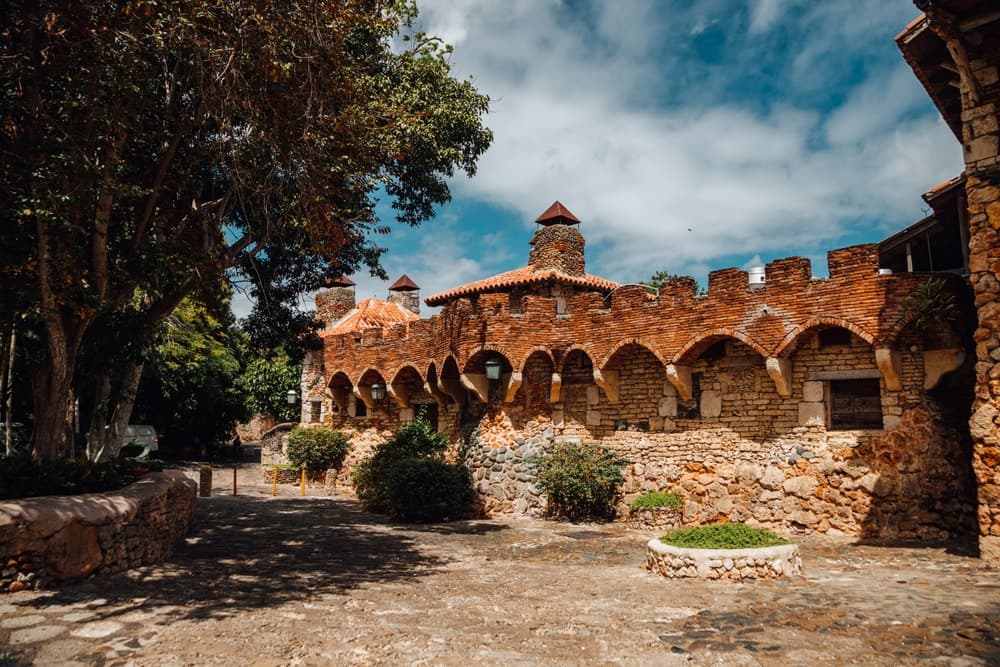
Altos de Chavón is a village constructed in the style of a 15th-century Mediterranean city, perched above the Chavón River in La Romana province. A modern architectural achievement realized between 1976 and 1982, the site brings together a church, a Greek amphitheater, an art school, a pre-Columbian museum and several galleries. It stands as one of the main cultural highlights of southeastern Dominican Republic, roughly 1h15–1h30 drive from Punta Cana.
Why visit Altos de Chavón
The village stands out for its cut-stone architecture, cobblestone streets and sweeping views over the Chavón River's meanders. Beyond the stroll itself, there's a vibrant cultural life here: amphitheater programming, pre-Columbian museum exhibitions, workshops at the art school affiliated with Parsons School of Design. The visit takes 1h30 to 2h on foot, longer if you plan lunch or an evening show.
The site works equally well as a short stop during a beach stay or as a more leisurely visit for travelers drawn to built heritage and Dominican craftsmanship.
History of a reconstructed city
Altos de Chavón is not a historic village but a modern creation. The project was conceived by American industrialist Charles Bluhdorn, then owner of the Casa de Campo resort, who wanted to endow the region with a full-fledged cultural center. Design and construction oversight were entrusted to Italian set designer Roberto Coppa, who drew the village in the style of a 15th-century Mediterranean city. Construction stretched from 1976 to 1982, with painstaking hand-cut stonework.
Nicknamed "La Flor del Este,
Interested in this visit?
We can include it in your personalised itinerary.